
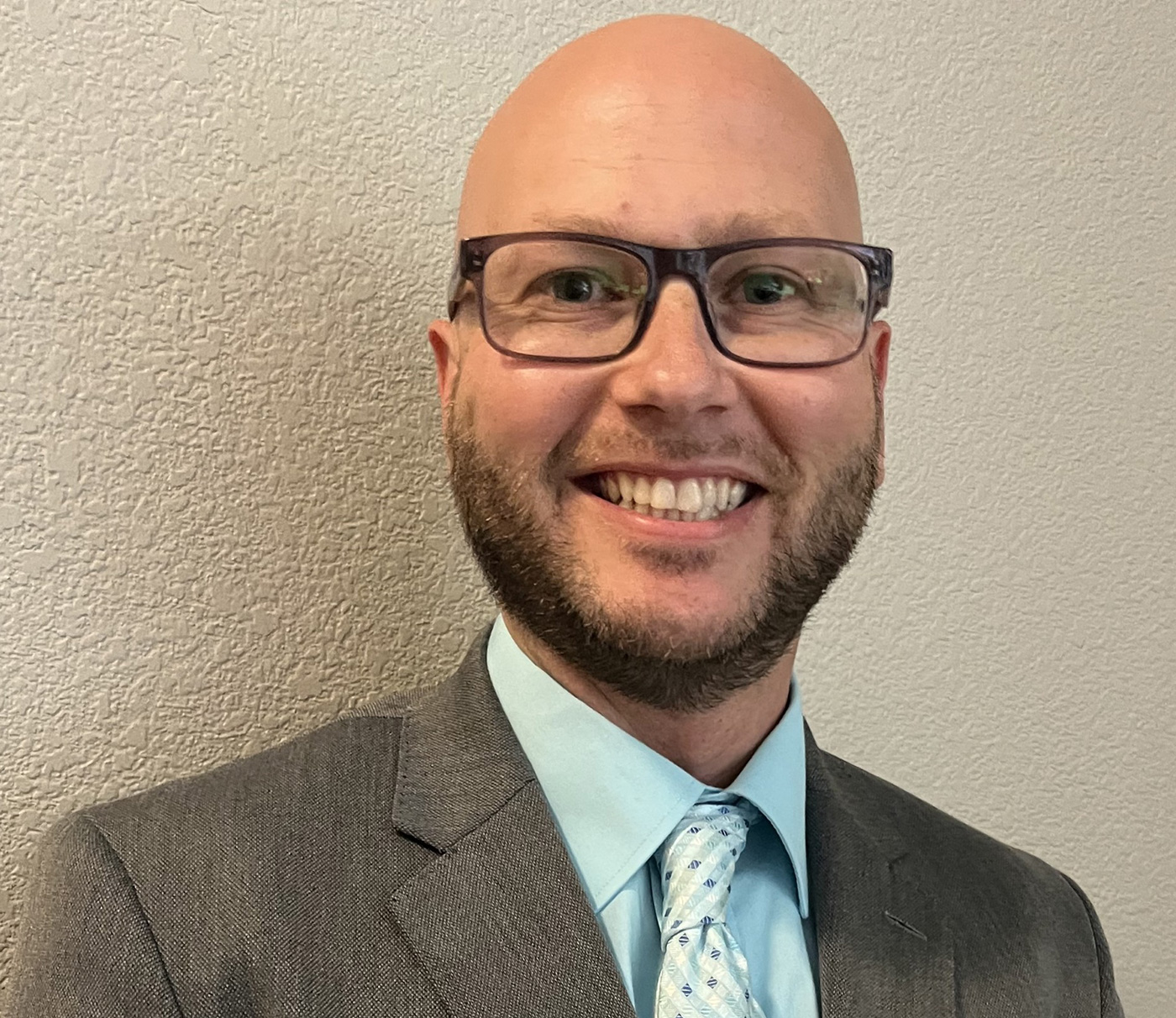
By: Brandon Boedigheimer, VRpatients
Expanding Access, Repetition, and Clinical Judgment in Nursing and EMS Education
I have spent more than 15 years working in healthcare simulation. Much of that time was focused on high-fidelity manikins, scenario programming, and lab-based training.
Don’t get me wrong – manikin simulation still plays an important role, but over the last several years, something has become clear.
Virtual reality training in healthcare is not replacing traditional simulation. It is expanding what is possible.
For nursing and EMS programs facing faculty shortages, limited clinical access, and growing enrollment demands, scalability and repetition are no longer optional. They are essential.
The Pain Points on Nursing and EMS Programs
Nursing and EMS education continues to face increasing pressure due to:
- Limited clinical placements
- Faculty shortages
- Expanding student cohorts
- Higher expectations for competency-based education
- Greater emphasis on clinical judgment and communication
Students are entering practice environments that are more complex than ever.
They need more than task completion. They need to strengthen skills such as recognizing patient deterioration, prioritizing effectively, communicating using structured tools like SBAR (Situation, Background, Assessment, Recognition), and making safe decisions under pressure.
Traditional simulation helps. But it has limits.
The Scalability Problem Most Programs Do Not Talk About
I have programmed many manikin scenarios that were run in simulation labs with three or four students gathered around a single patient simulator.
One scenario.
One manikin.
One scheduled time slot.
A few active participants.
The rest observing.
That is not a flaw in manikin-based simulation. It is simply how resource-dependent lab training works.
Now compare that to virtual patient simulation.
When a scenario is built in a virtual platform, it can be deployed to hundreds or even thousands of students at the same time.
Every student runs the case.
Every student makes decisions.
Every student practices clinical reasoning.
Every student receives exposure.
Access changes entirely.
Unlimited Repetition Without Requiring a Headset
Immersive VR headsets offer strong realism. For some learners and programs, that is valuable.
But VR is not for everyone.
Not every student prefers a headset.
Not every institution wants to manage hardware at scale.
Not every program has the infrastructure to support it.
What matters most is access and repetition.
When students can log in from a laptop at home and run a scenario independently, repetition becomes practical.
They can:
- Re-run deteriorating patient cases
- Practice SBAR communication
- Strengthen prioritization skills
- Reinforce classroom concepts
- Prepare before entering the simulation lab
As many times as needed.
If a student runs a case ten times instead of once, confidence changes. Decision-making stabilizes. Competency improves.
Repetition drives mastery.
No Proctor Required. Faculty Time Matters.
Faculty time is one of the most limited resources in healthcare education.
Traditional simulation requires an instructor present for facilitation, observation, and debriefing.
That is appropriate for high-level simulation events.
But not every repetition requires live supervision.
When students can complete structured scenarios independently, instructors are freed to focus on:
- Advanced simulation
- Meaningful debriefing
- Targeted remediation
- Curriculum refinement
This is especially important in programs facing faculty shortages. Scalable simulation models must account for instructor workload.
Objective Measurement and Curriculum Alignment
Another major advantage of modern virtual simulation platforms is structured assessment. Scenarios can be built with grading rubrics that measure:
- Pass or fail outcomes
- Percentage-based performance
- Communication effectiveness
- Safety checks
- Clinical sequencing
- Escalation decisions
For example:
Did the student perform a safety check before initiating care?
Did they apply a concept that was taught last week in lecture?
Did they prioritize appropriately?
Did they escalate concerns in a timely manner?
If a concept is introduced in class, it can be embedded into a simulation and evaluated. This strengthens alignment between didactic content and clinical application.
Some platforms also integrate exam-style questions within scenarios, reinforcing knowledge in context rather than through memorization alone. Students are not just preparing for tests. They are practicing clinical reasoning.
Layering Simulation for Stronger Outcomes
The strongest nursing and EMS programs are not choosing between modalities. They are layering them strategically.
Students build their foundational clinical reasoning through virtual patient simulation. They arrive at the simulation lab more prepared. Manikin time becomes higher value, and faculty time is used more efficiently.
Traditional simulation remains important for psychomotor skill development and team dynamics.
Virtual simulation strengthens repetition, accessibility, and judgment development.
Together, they create a more balanced and scalable training model.
The Bottom Line
Healthcare education is not becoming simpler. Programs that rely on a single simulation approach will struggle to scale.
Virtual reality training in healthcare offers an opportunity to expand access, increase repetition, reduce faculty burden, and strengthen clinical decision-making.
The goal is not replacing what works. The goal is building a smarter, layered simulation strategy that prepares students more effectively for real patient care.
If you are evaluating how virtual patient simulation could support your nursing or EMS program, we can explore:
- Where your current model creates bottlenecks
- How repetition is structured in your program
- How simulation aligns with lecture content
- And how to measure competency more objectively
Healthcare education is evolving. The programs that adapt thoughtfully will lead the others. Don’t be the program that falls behind.
Ready to See How This Fits Your Program?
Click here to learn how virtual patient simulation can expand access and repetition in your program or experience it firsthand by scheduling a zero-obligation informational demo today!